Introduction
- Begin with the Kepler Mission's findings, noting the potential for billions of habitable planets out there.
- Highlight the vastness of the universe – hundreds of billions of galaxies!
- Pose the question: Could any of these planets harbor life beyond our own? Could there be advanced civilizations somewhere in the cosmos?
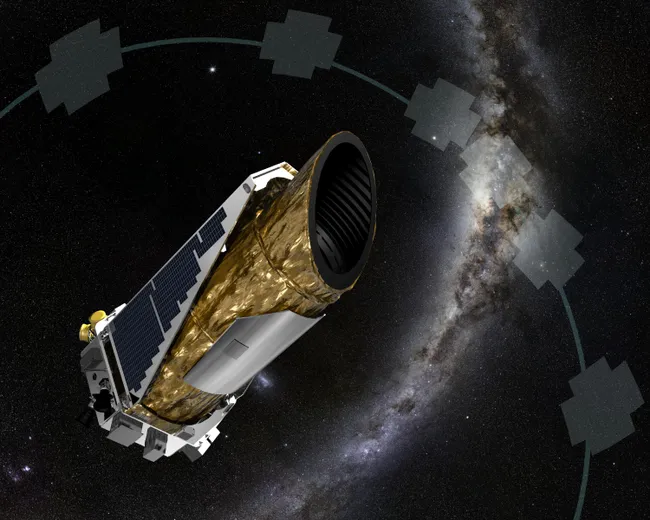
The artist's concept shows NASA's planet-hunting Kepler spacecraft operating in a new mission profile called K2. (Image credit: NASA Ames/JPL-Caltech/T Pyle)
The Breakthrough Listen Project
- Explain the mission's purpose – to search for signals of technology that would indicate intelligent extraterrestrial life.
- Outline the project's scope – targeting 97 galaxies containing billions of stars, and detecting millions of radio signals.
- Briefly explain the concept of technosignatures.
 |
| Credit: FOTOKITA/Shutterstock |
False Hope, Then Disappointment
- Recap the initial excitement caused by the potential signals detected.
- Detail the setbacks – how all the signals could ultimately be traced back to artificial sources on Earth.
- Emphasize that no alien civilizations were found by the study.
Lessons Learned
- The Rarity of Life: While disappointing, this study underscores just how precious life may be in this vast universe.
- Persistence is Key: Failed attempts are merely learning experiences within the scientific process. The search for alien life, despite numerous challenges, will surely continue.
- The Power of the Scientific Mindset: Highlight the importance of rigorous methodology, adapting to failures, and the relentless pursuit of knowledge that underlies true scientific endeavor. It's this mindset that can eventually make life-changing discoveries.
Conclusion
- While the immediate result is disheartening, it does not negate the possibility of intelligent alien life existing elsewhere in the universe.
- We should marvel at our own existence and value the time we have. Use it to explore, create, and strive for greater understanding.
By
Riman Mandal
Comments
Post a Comment